





Case study · Designed and built by me · AI
Overwatch
A control room for AI agents that can act on money and customer records.
I designed and built a working prototype that lets the right people approve, stop or recover risky agent actions.
Behind the work
- My role
- Product designer and builder, working alone
- Type
- Self-started 0-1 product, web app
- Started
- 1 September 2026
- Status
- Active
- Built with
- AI-assisted development with ChatGPT and Codex. I designed the product logic, journeys, permission model, review states and interface.
- Users
- Finance, operations, platform and audit teams
- Data
- Made-up billing scenarios. The audit trail is simulated and not stored permanently yet.
What I built
I built it, not just drew it.
Overwatch is a working product, not a mockup. I wrote the product brief, the roles, the policy rules and the failure cases. Then I built it with AI-assisted development and checked every result myself.
- Product
- The problem, the scope and what to leave out
- Rules
- Four roles, who may decide what, and the policies that route each action
- Interface
- Every screen, state and blocked state
- Build
- Developed the working prototype with AI-assisted coding in ChatGPT and Codex, then reviewed and tested every output
- Testing
- Role-play journeys, fixes, then a repeat pass
- Live
- Published on Cloudflare Pages, with source control on GitHub
Built with
- Next.js and React
- TypeScript
- CSS
- PDF.js for browser-based PDF text extraction
- Lucide React for interface icons
- Cloudflare Pages for public hosting
- GitHub for source control
- AI-assisted development using ChatGPT and Codex
- Local synthetic data for product simulation
Document analysis is rule-based. No AI model is called while the prototype runs.
The problem
AI agents are starting to do things, not just answer questions.
They issue refunds, cancel contracts and update customer records. Most tools for agents are built around chat and background automation. That is fine while the stakes are low. It is not fine when one mistake costs real money.
Before anything runs, a team needs to know:
- What is the agent proposing, and why?
- What evidence supports it, and what is missing?
- Which rule applies, and who is allowed to decide?
- Which systems will change?
- Could it run twice?
So the question I worked on: how can the right people control risky agent actions without watching everything the agent does? I designed the moment after an agent proposes an action. Tools for watching prompts and traces already exist. The gap is who decides, on what evidence, at what cost, and how to recover when something breaks.
How it works
Every action follows the same path.
- AgentThe agent proposes an action.
- PolicyA fixed policy decides who must approve it.
- ReviewerA person with the right role reviews the evidence and the cost.
- ExecutionApproved work runs once.
- AuditThe result is recorded.
If a step fails, only the AI Platform Admin can recover it.
How evidence becomes a controlled AI action
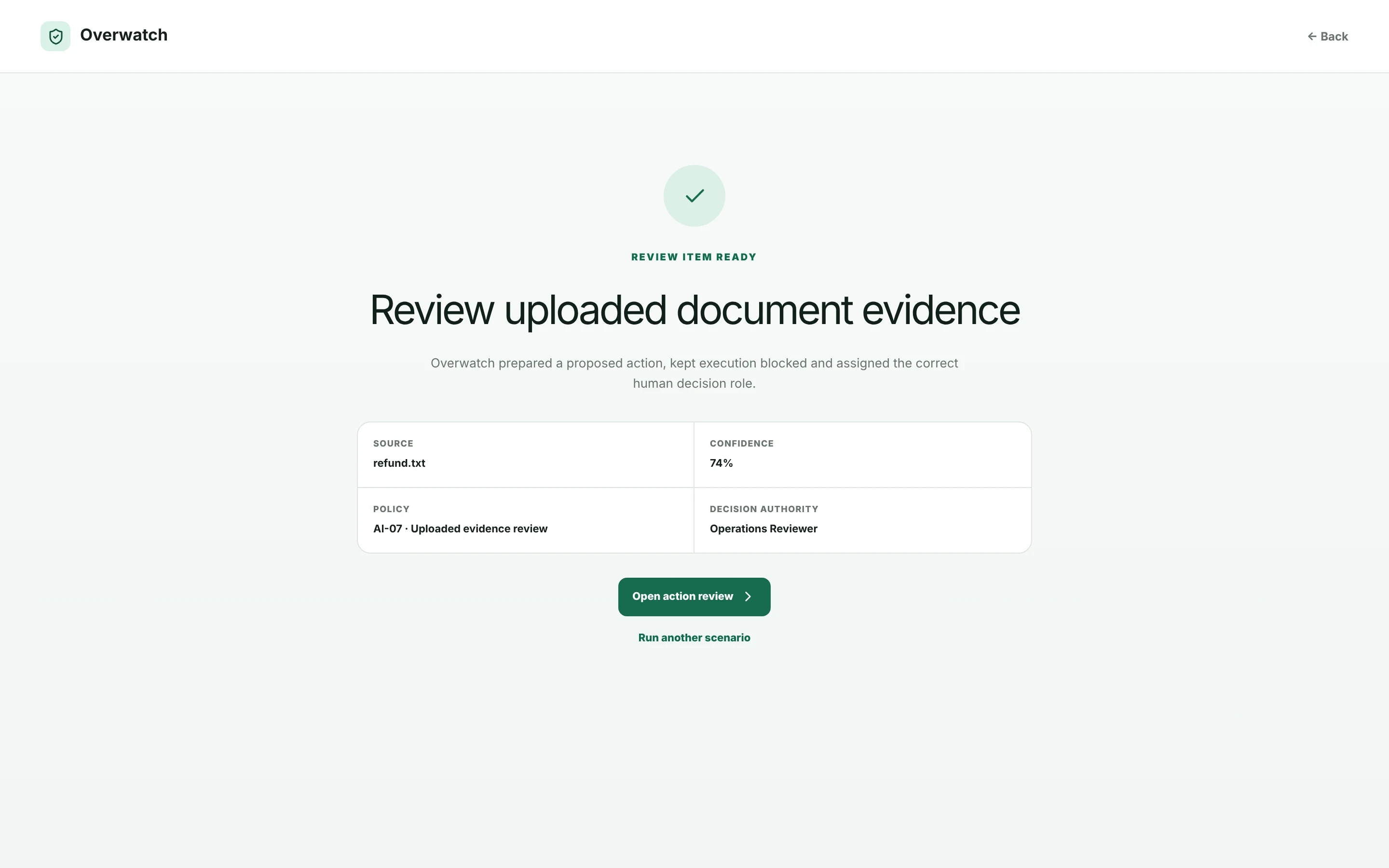
Overwatch reads the available evidence, identifies decision signals, applies policy rules and creates a proposed action. Execution remains blocked until an authorised person reviews it.
Two ways in
Try it with a prepared case, or bring your own document.
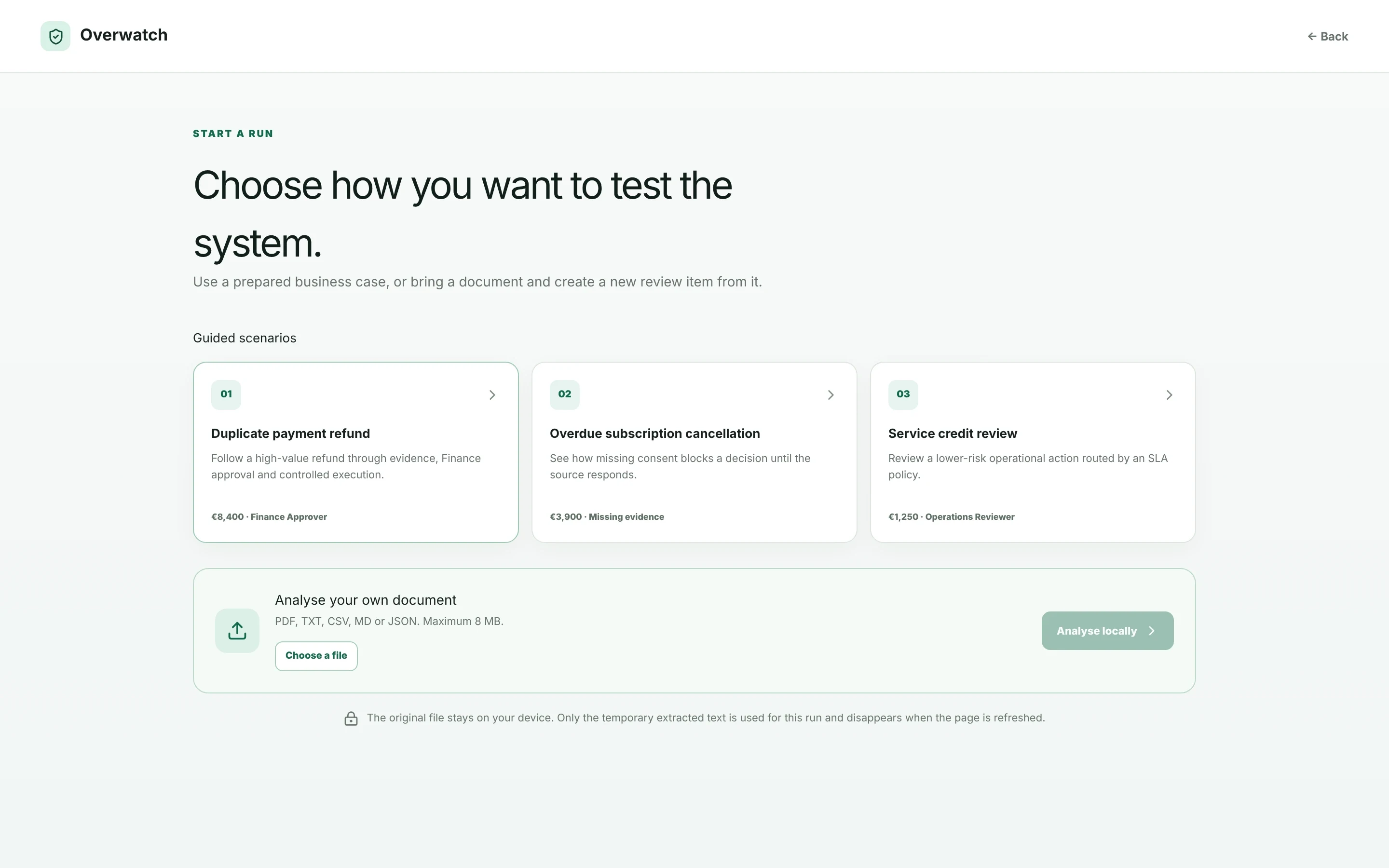
A reviewer should be able to see the system work in two minutes, and a sceptic should be able to test it with their own material. So the prototype opens on a choice.
Guided scenarios
Three prepared cases: a €8,400 duplicate refund, a €3,900 cancellation with missing consent, and a €1,250 service credit. Each follows the full path to a human decision.
Your own document
Choose a PDF, TXT, CSV, MD or JSON file up to 8 MB. It is read in the browser, not uploaded or stored. Rule-based detection looks for signals such as refund, invoice, payment, consent, contract and incident, then builds a review item, keeps execution blocked and assigns the human role that must decide.
There is also a populated sample workspace to explore without starting a run.
Four decisions
1. The AI advises. People decide.
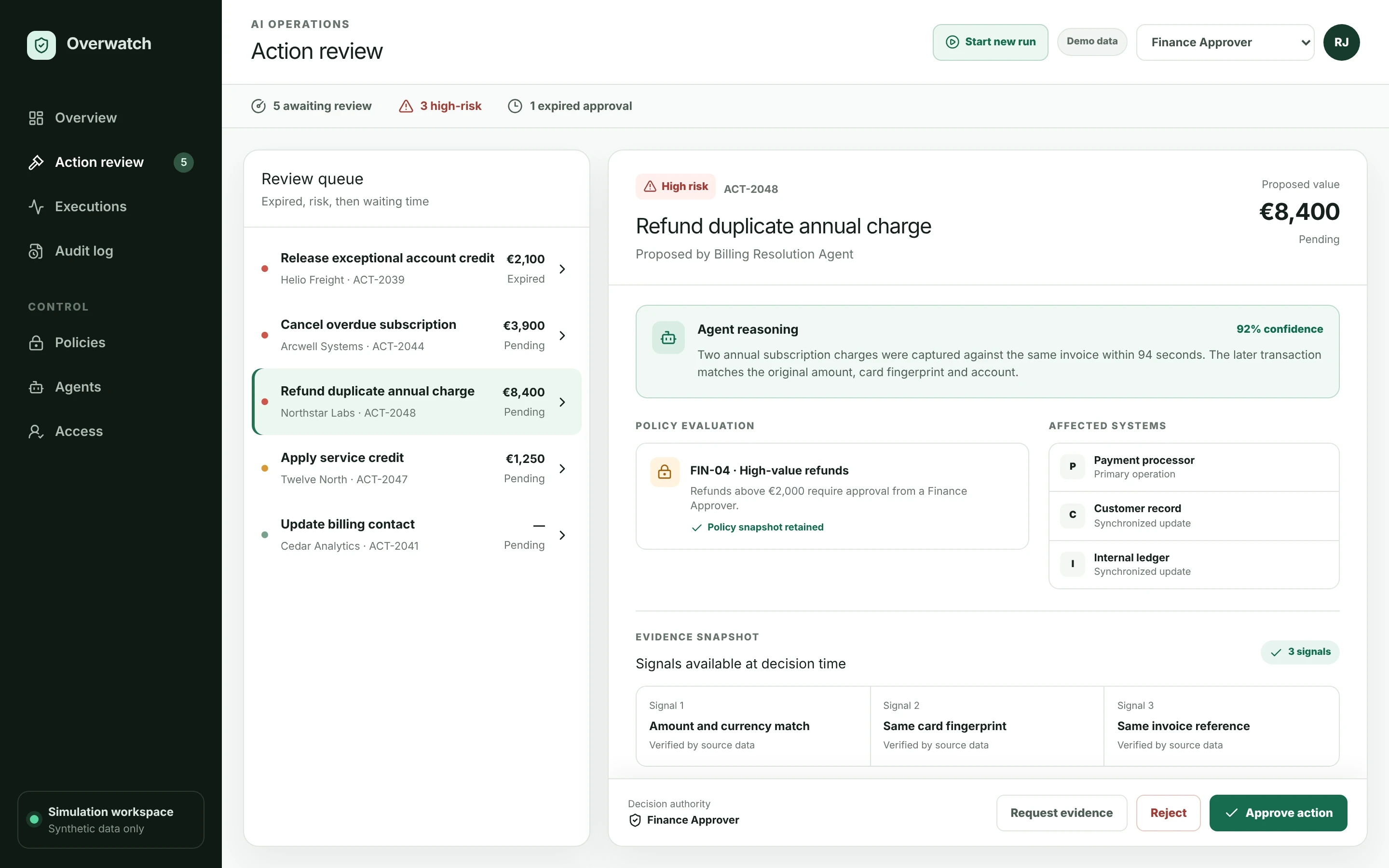
The agent brings a proposal, its reasoning and a confidence level. A fixed, readable policy picks who must approve. In the prototype the interface enforces that; a real version would check it on the server. Rules a person can read are easier to explain to an auditor than hidden model logic.
Decision 2
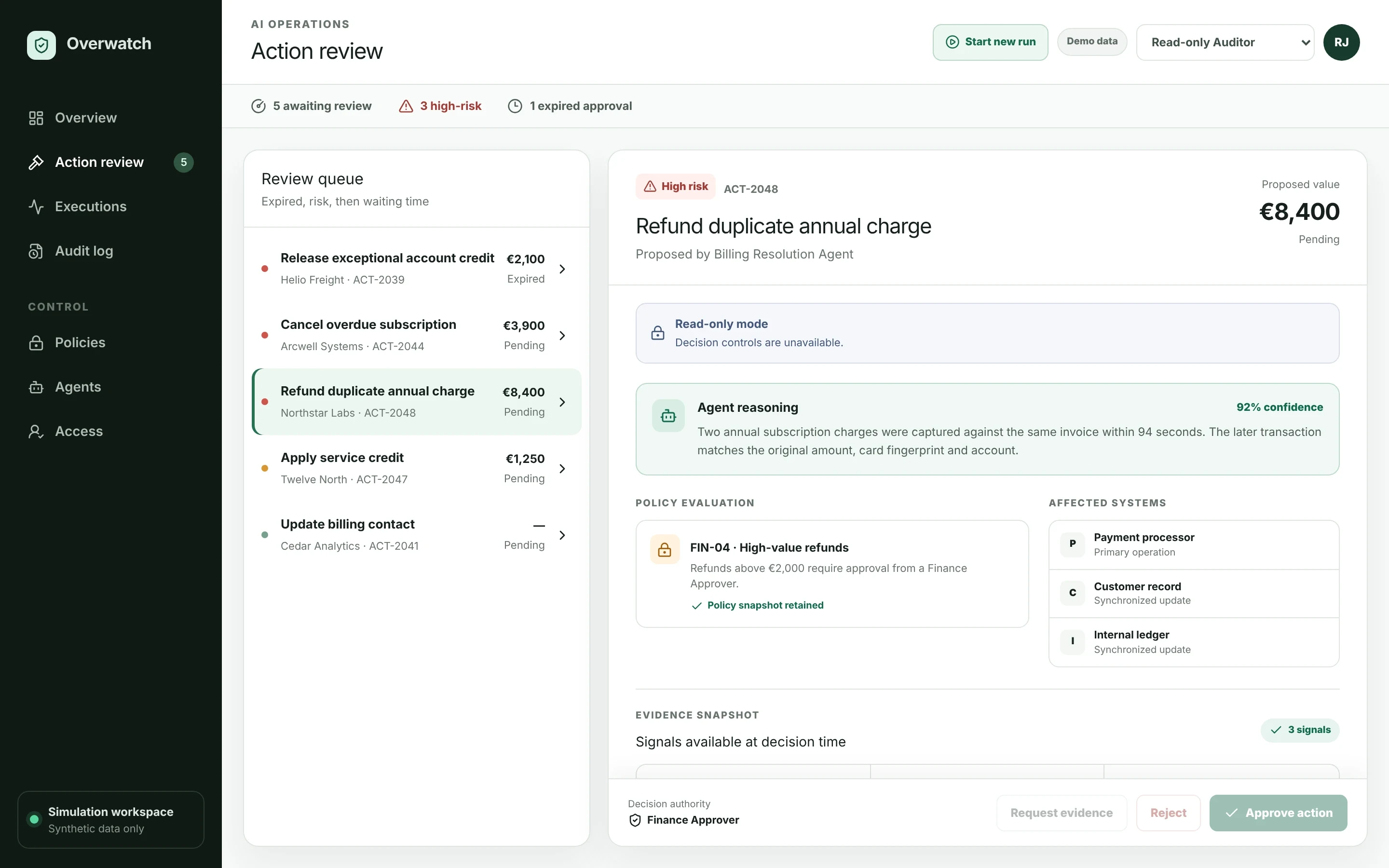
2. Limits show before the click.
If a role can't use a control, it is greyed out and says which role is needed. An error after the click comes too late.
Decision 3
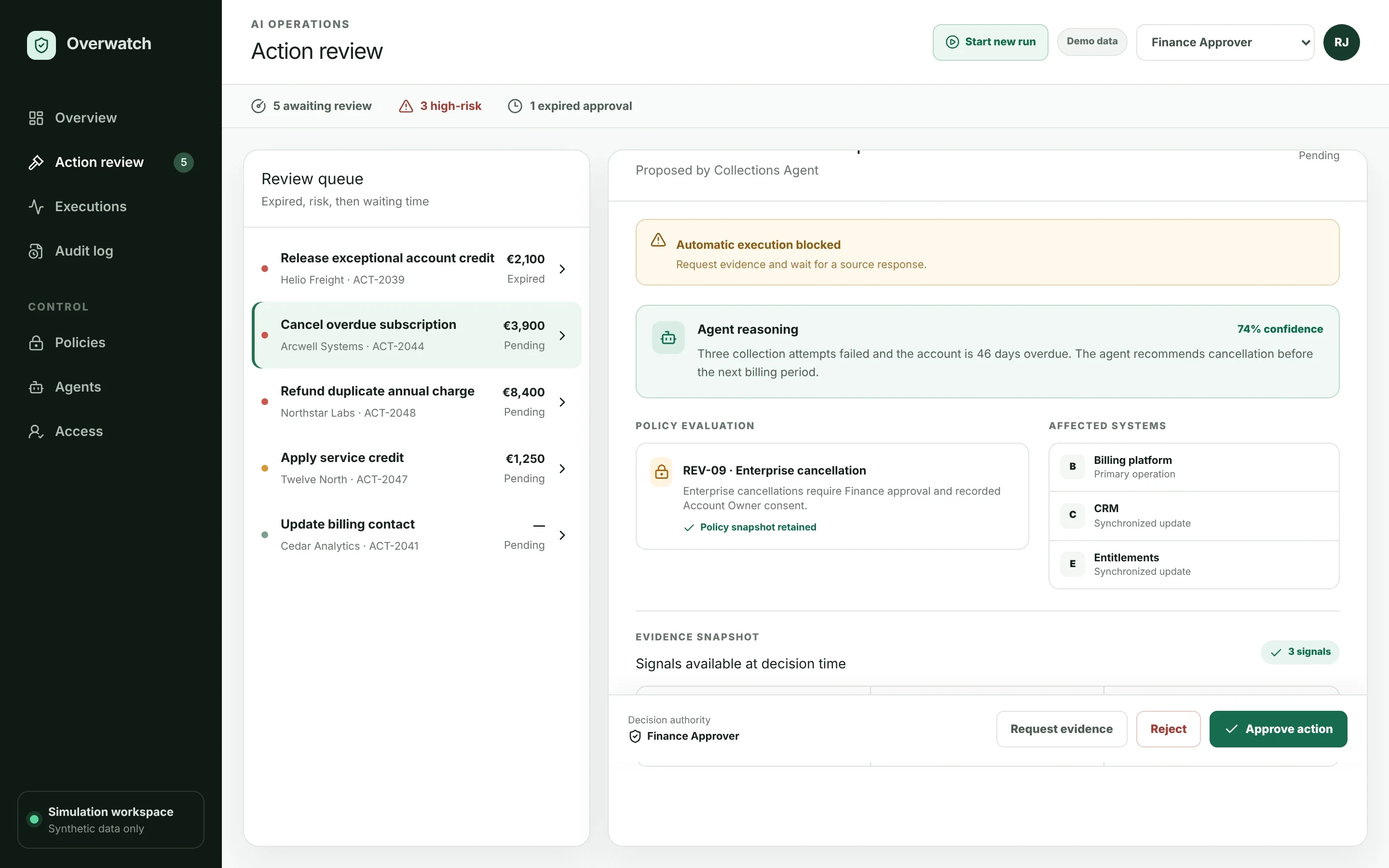
3. Missing evidence stays missing.
Asking for evidence and receiving it are two separate states. Confidence stays at 74% until the source responds, then moves to 86%. The dashboard never suggests proof exists when it doesn't.
Decision 4
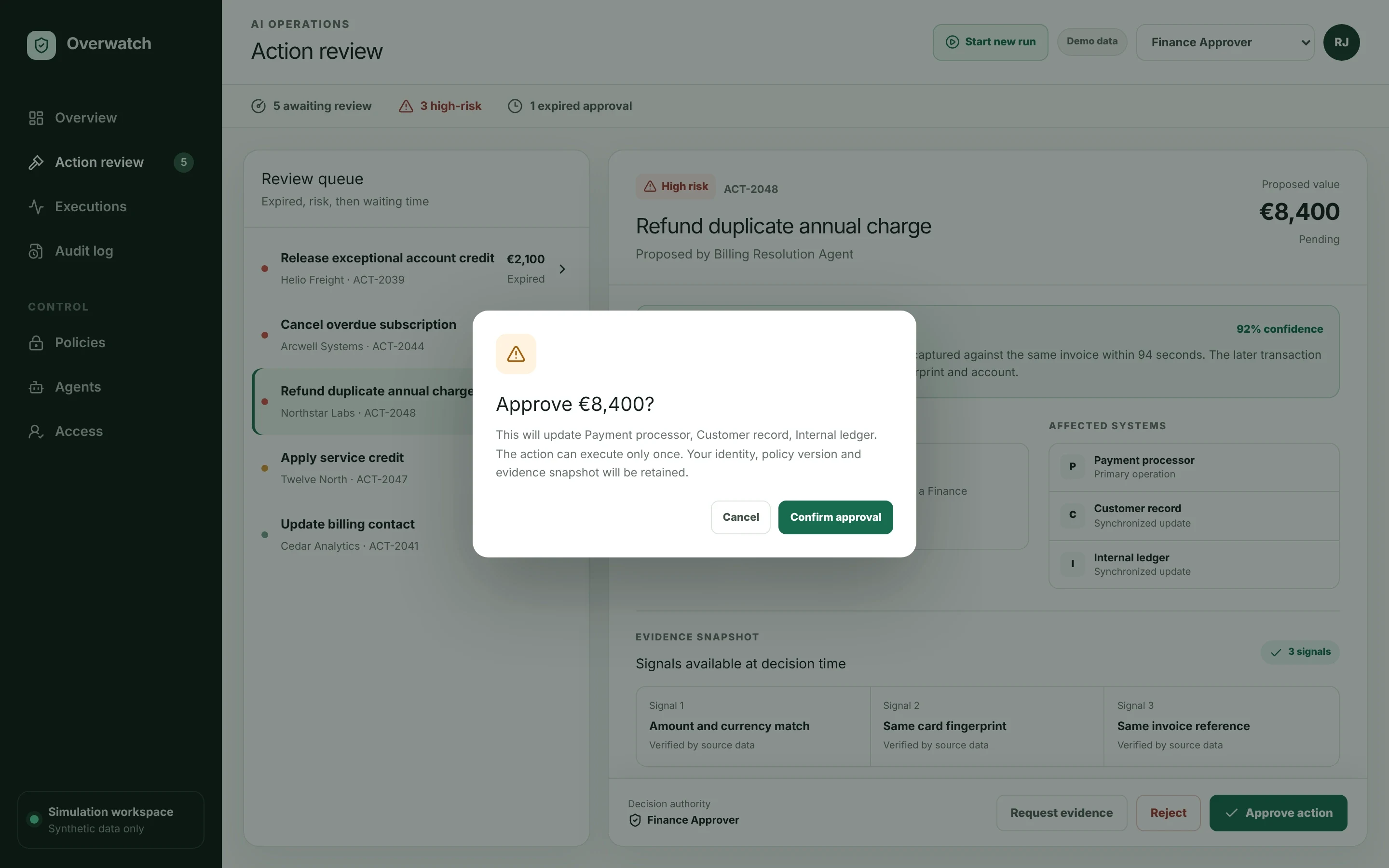
4. Cost first. Final means final.
Before an €8,400 approval, a dialog names the payment processor, the customer record and the internal ledger it will change. After approval, the buttons disappear. Each approved action gets one execution record and one idempotency key, so the same action can't run twice.
Tested, broken, fixed
What broke, and what changed.
Five friends and colleagues tested the interactive prototype by taking on the roles of Finance Approver, Operations Reviewer, AI Platform Admin, Compliance Auditor and Finance Director. Their journeys were task-based and moderated. The findings informed the interface changes, followed by a repeat regression pass to verify the fixes.
This was informal role-play, not research with real customers. It does not prove that outside users would succeed.
| Who | What broke | What changed |
|---|---|---|
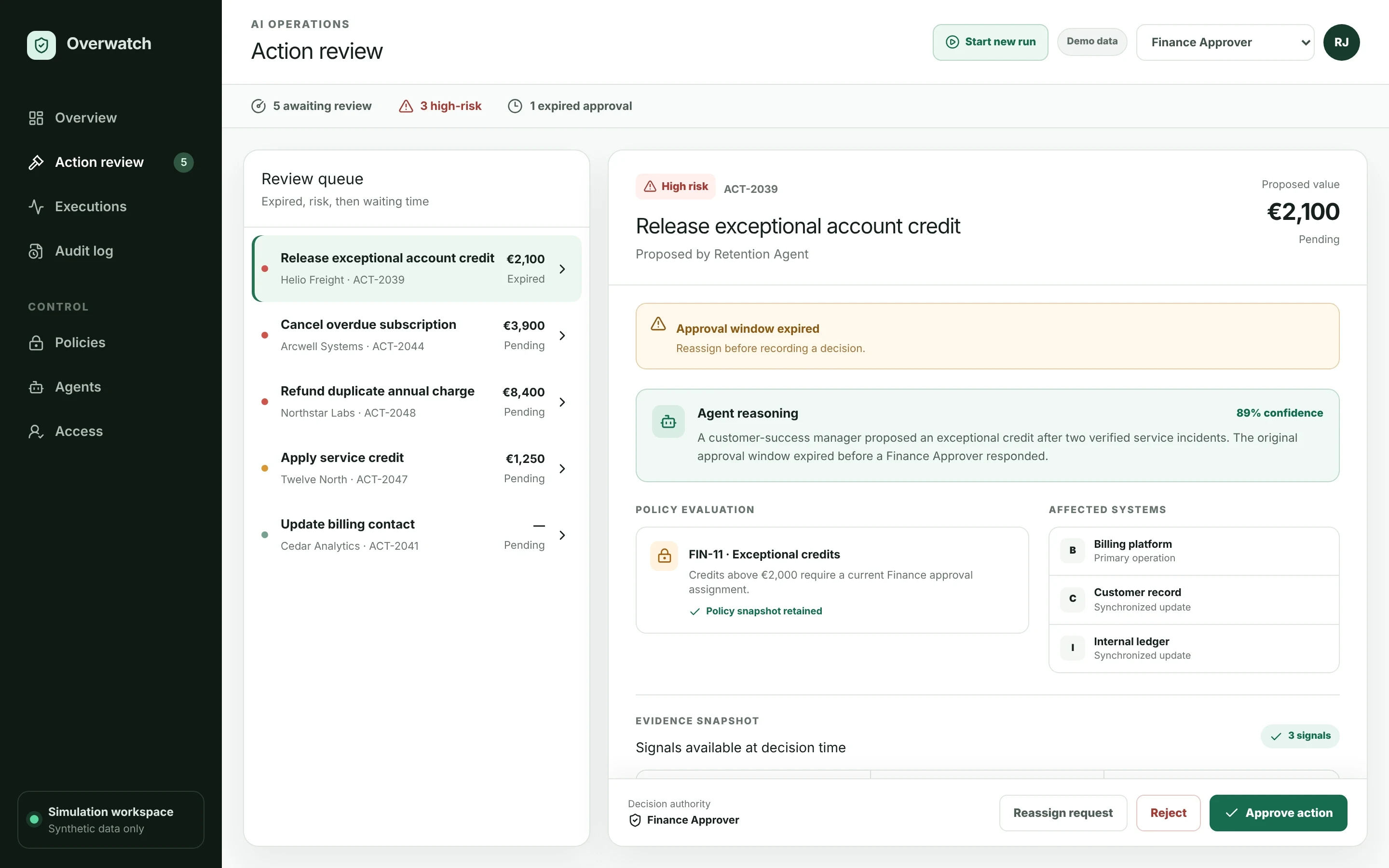
| Finance approver | Expired approvals looked like normal pending work. | Expired items come first and stay blocked until reassigned. |
| Finance approver | Asking for evidence marked it as verified. | Requesting and receiving are separate. Confidence stays at 74% until the source responds. |
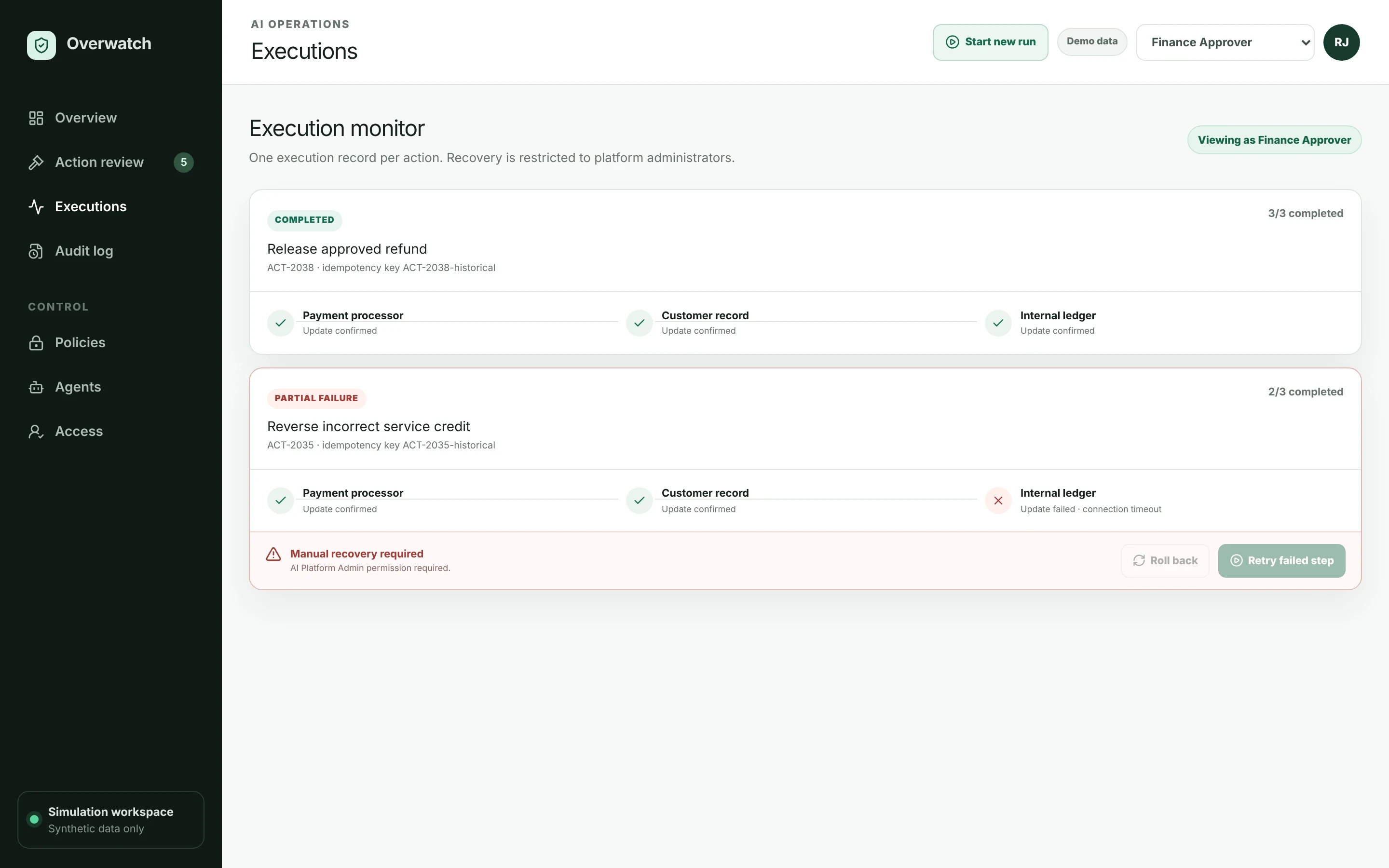
| Operations reviewer | Anyone could retry or roll back a failed run. | Only the AI Platform Admin can, and the reason is shown. |
| Finance director | The same €8,400 action could run twice. | Final-state controls and one idempotency key. |
Show moreShow less
| AI platform admin | Pausing an agent was instant and left no record. | An impact warning and an audit entry. |
| Compliance auditor | Decision buttons looked usable, then failed after the click. | They are disabled in read-only mode. |
| Finance director | The overview showed counts but no money. | It now shows value awaiting review and value protected. |
The product
Two dashboards carry the story.
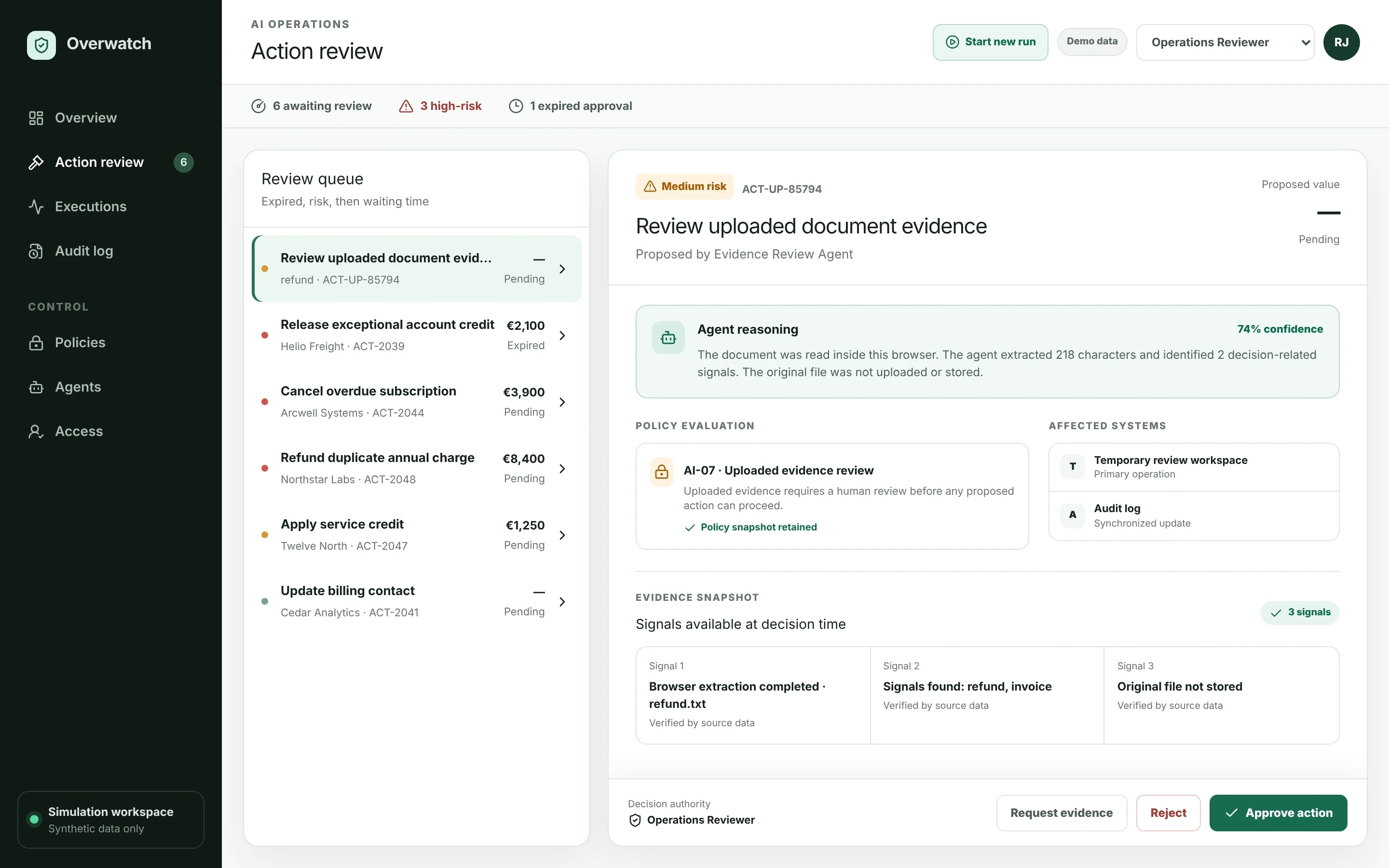
Action review
Shows the value, the agent, the policy, the affected systems, the evidence and who can approve. Expired approvals offer reassignment.
Execution monitor
Names the system that failed and limits recovery to the AI Platform Admin.
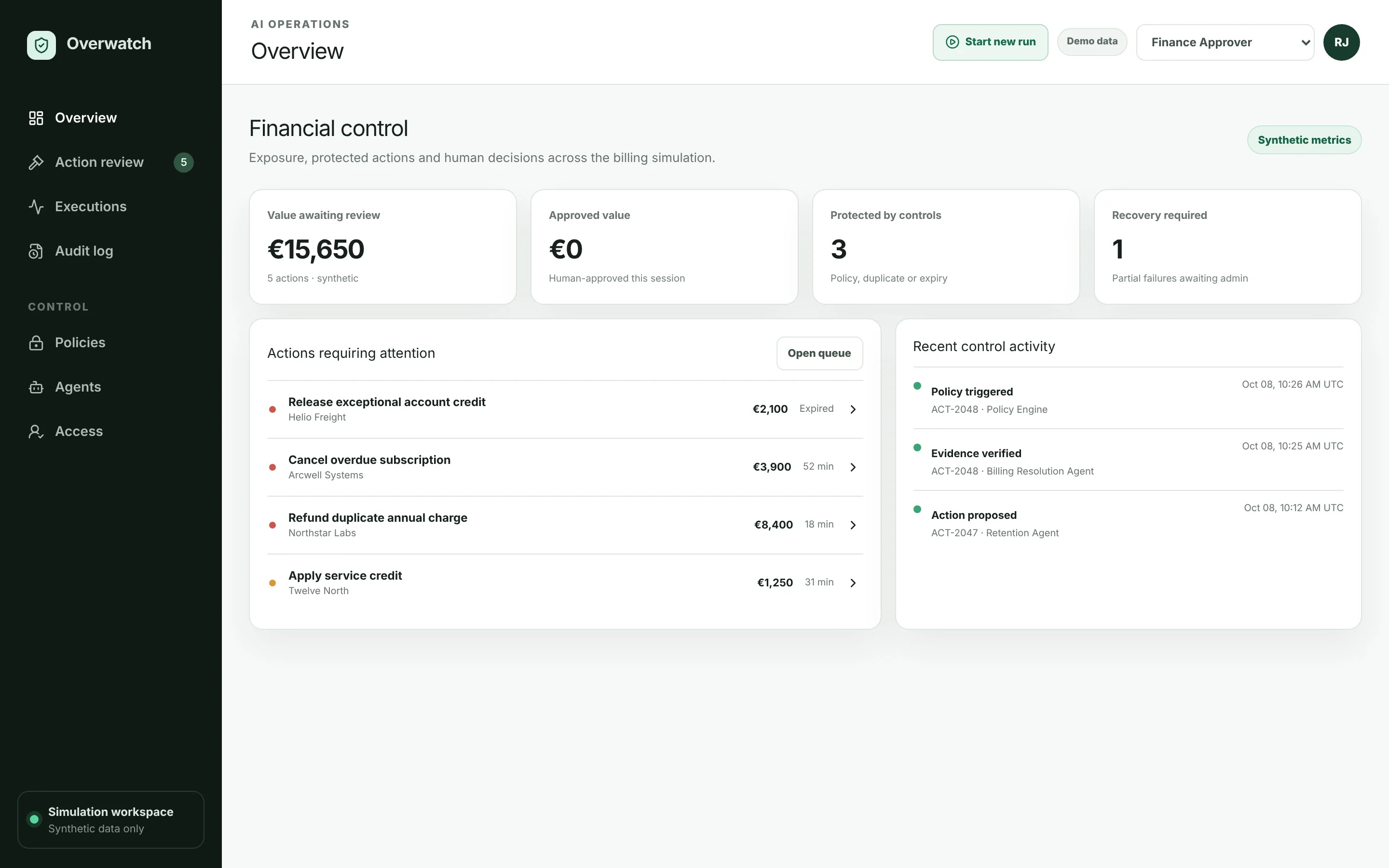
Overview
Money waiting for review and money protected. Made-up data, labelled as such.
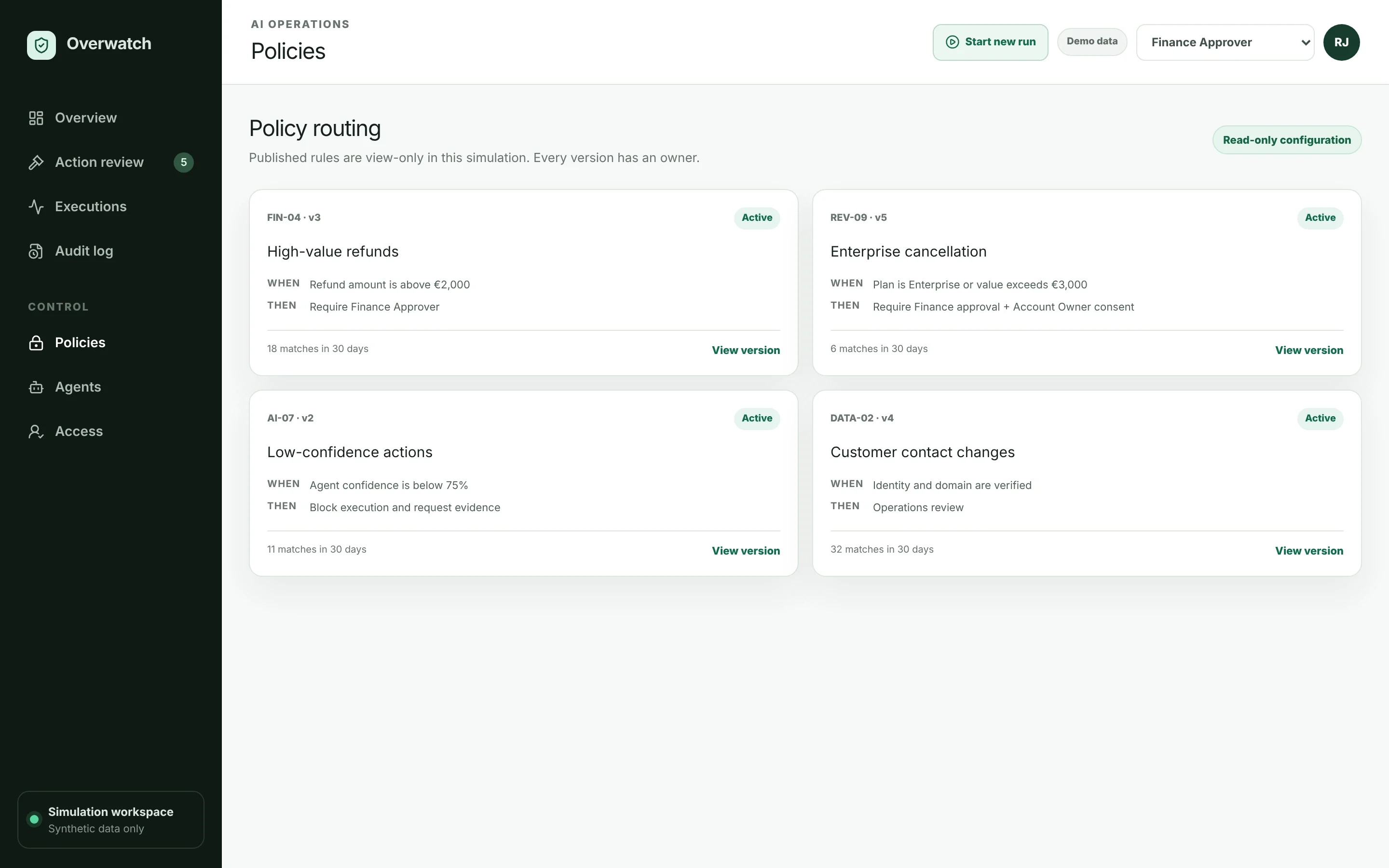
Policy rules
Named rules, version and owner. Read-only for now.
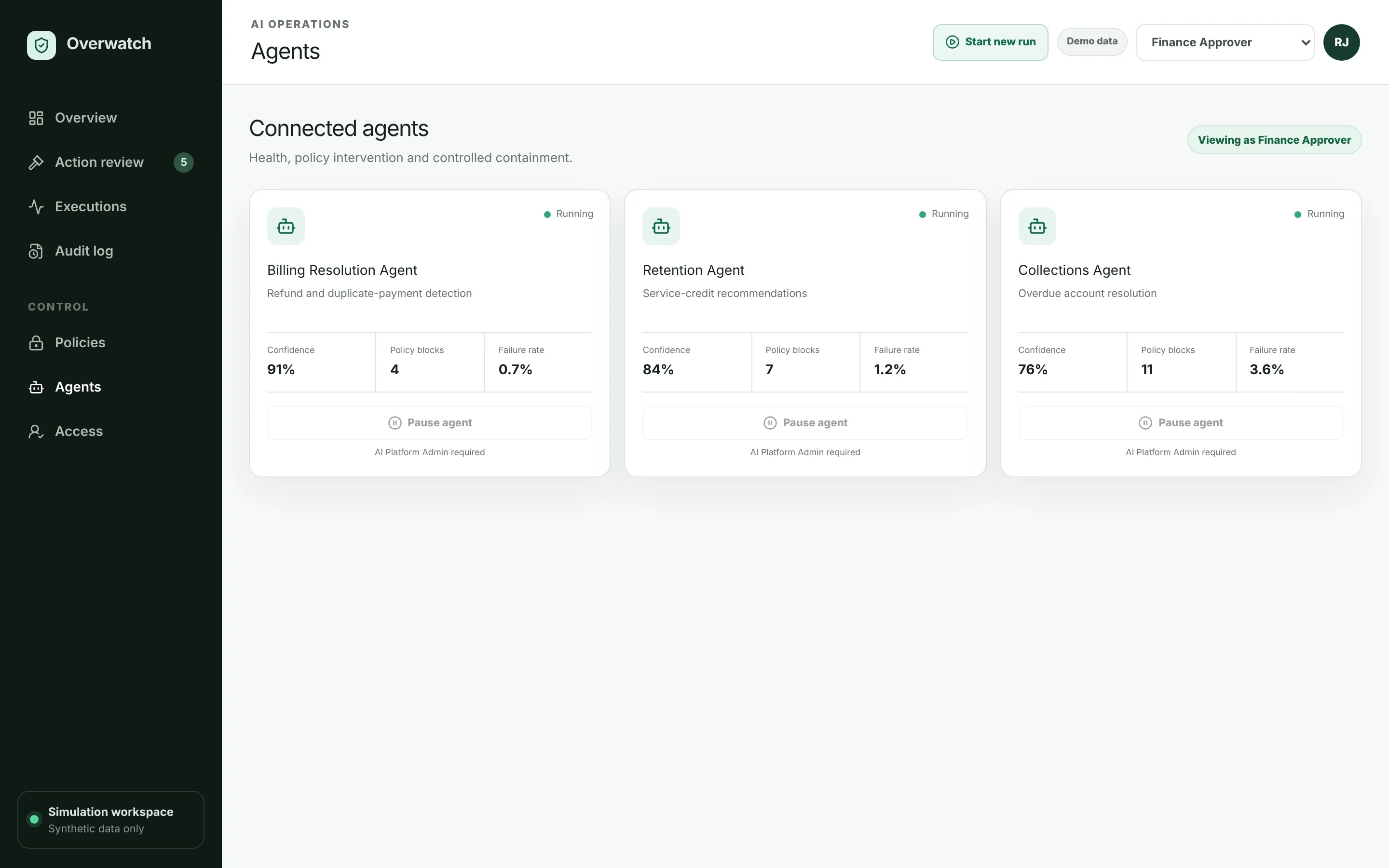
Agent controls
Status, scope, pause and resume, with a confirmation and an audit entry.
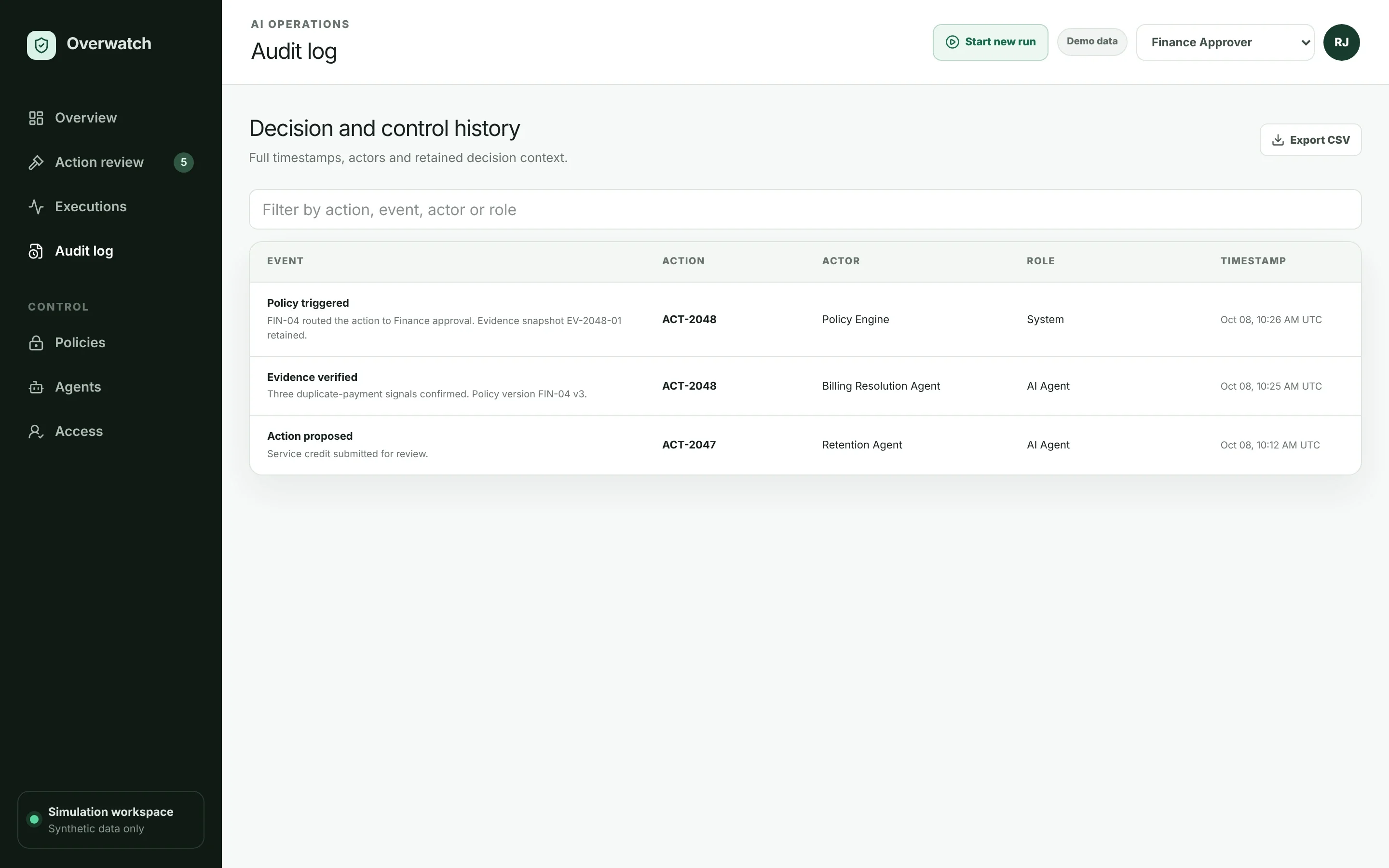
Audit history
Who did what, in which role, and when. Filter and export to CSV.
What is real
Real, simulated, not built yet.
- Audit trail simulation: functional
- Persistent backend storage: planned
Real
Role switching, decision guards, evidence states, confirmation dialogs, an audit trail for decisions, permission blocks and execution events, a responsive layout, and browser-based reading of your own file with rule-based signal detection and policy routing.
Simulated
Customers, amounts, agents, policies, connected systems, execution steps, confidence scores that start from a baseline and rise with recognised signals, and the audit history shown in the dashboard.
Not built yet
Sign-in and server-side role checks, persistent audit storage on the public deployment, real CRM or billing connections, live AI model calls, and separation of client data.
The prototype generates an audit trail for decisions, permission blocks and execution events. Persistent production storage is designed into the architecture but is not yet enabled on the public deployment.
What I learned
What I learned, and what's next.
- The hardest design moments are the unclear, late, blocked or broken ones.
- Showing a limit before someone reaches it works better than explaining it afterwards.
- Saying clearly what the project can't prove makes the rest more believable.
What's next
- Test with five people in relevant roles. Success means most can explain a stopped action quickly and recover a failed update without help.
- Connect the audit trail to persistent storage, add sign-in and check roles on the server.
- Connect one system read-only with sandbox data, then add one write connection with duplicate protection.
- Link every AI claim to the exact passage in the document it came from.
- Run a small pilot on one workflow, such as high-value refunds, and measure review time, mistakes blocked and recovery time.
No business results will be claimed until a pilot produces them.
More AI builds
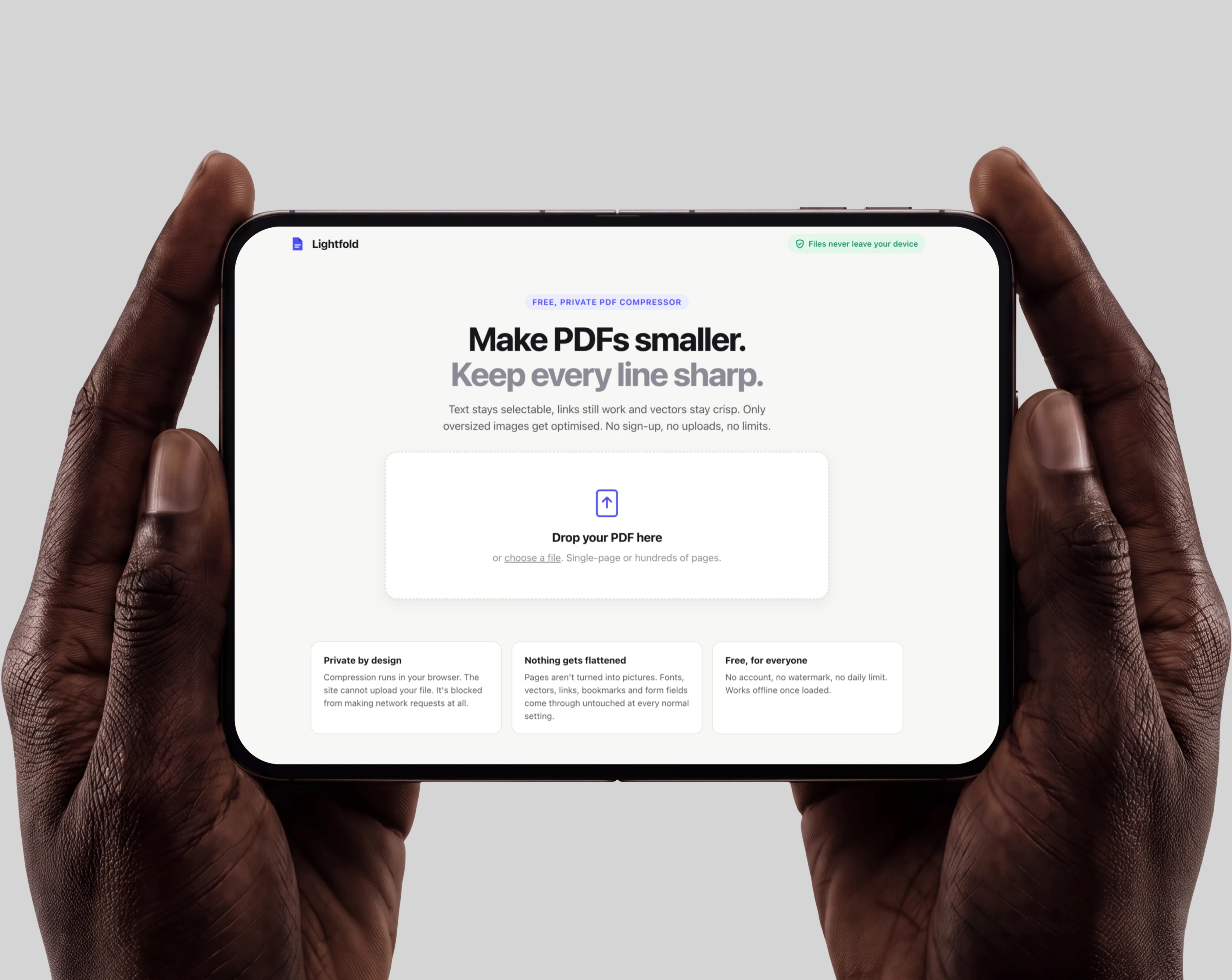 LightfoldA free, open-source tool that shrinks PDFs on your own device, so your files are never uploaded.Visit website 02Sales Technology / Lead Generation Automation
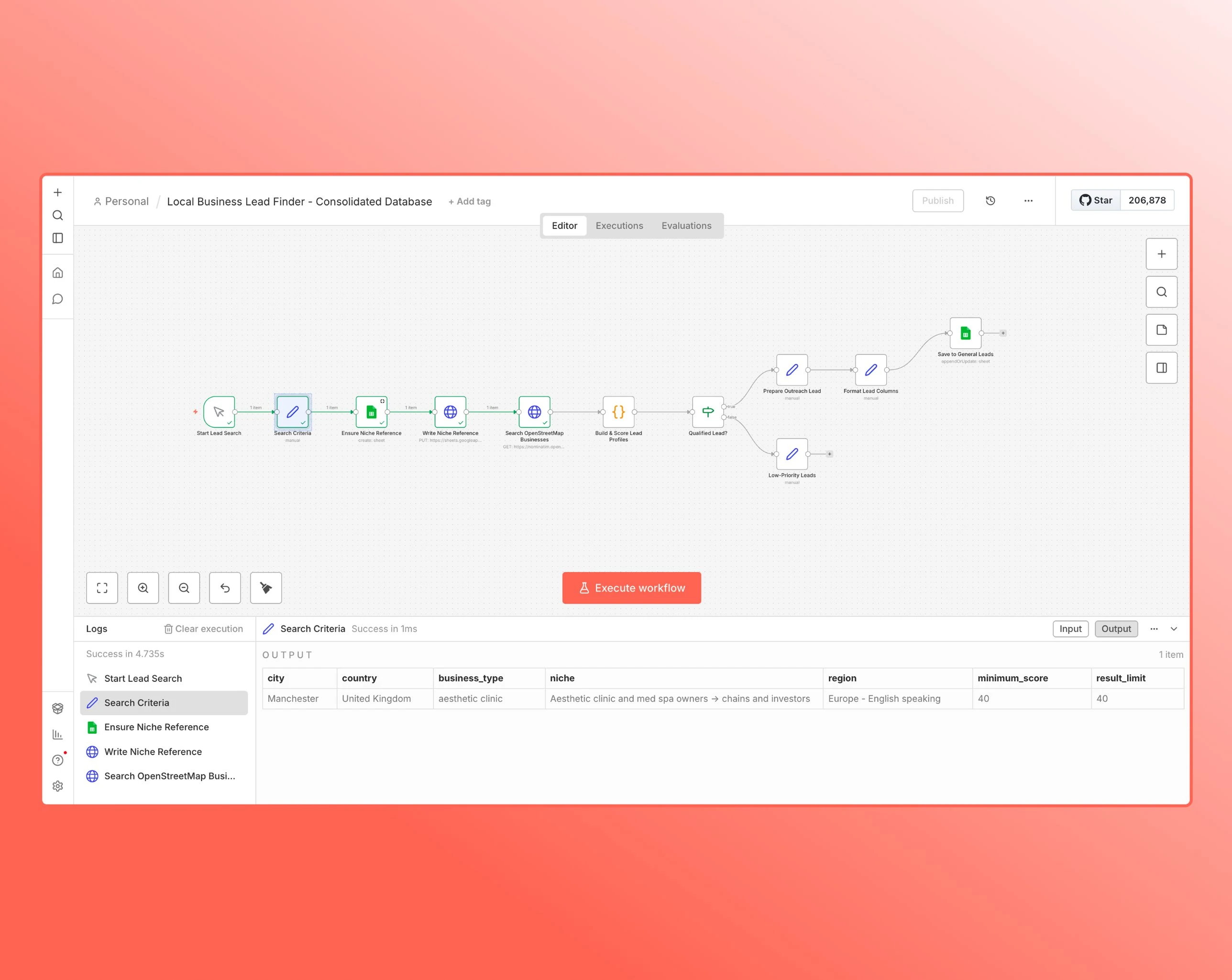 LeadScopeA self-hosted n8n workflow that finds local businesses, scores them, and saves the qualified ones into a Google Sheets outreach database.Open case study 03Lead capture / automationEnquliLead capture and automation for local service businesses. MVP built, in testing.Visit website